

Japan has one of the highest life expectancies in the world, at approximately 85 years on average, and one of the highest smoking rates of any developed nation. [1, 2]

Despite consistently high smoking rates among Japanese men over the past 30 years, lung cancer incidence and mortality in Japan have remained lower than in Western countries. This is a phenomenon researchers call the Japanese smoking paradox. [3]
Ikaria, a small Greek island in the Aegean Sea, follows a similar trend.

It is one of the world's five designated Blue Zones, which are locations where people live measurably longer than average. One in three Ikarians lives into their nineties and rates of cancer, heart disease, and dementia are significantly lower than in the West. [4]
Ikaria is also a population with a long history of high smoking prevalence. Studies of Ikarian elders found that nearly 50% had been smokers at some point in their lives. [5]
The same pattern also holds in Sardinia, another Blue Zone, where 48% of elders aged 89 to 101 also reported being smokers in the past. [5]

These are not isolated coincidences.
Nicotine, the primary active compound in tobacco, has a well-documented set of biological effects that mainstream public health messaging has largely ignored.
Here is what the research shows:
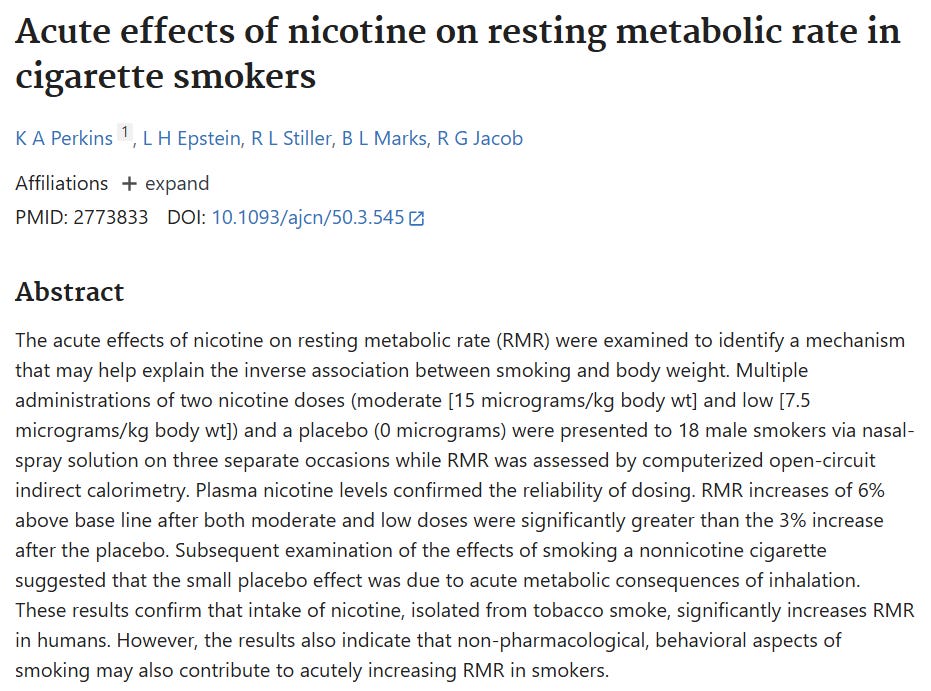
Nicotine raises resting metabolic rate by roughly 6-10%, which translates to an additional 200 calories burned per day without any change in diet. [6, 7]
It inhibits aromatase—the enzyme that converts testosterone to estrogen—by more than 50% in some studies. [8]

Chronic use lowers prolactin, TSH, LH, FSH, and growth hormone, all of which are associated with aging and metabolic dysfunction. [9]
"Serum prolactin levels are significantly lower in both male and female chronic smokers who smoke more than 10 cigarettes per day.”
"Chronic nicotine consumption may also lead to lower responses of other stress hormones (ACTH, prolactin, growth hormone) to a variety of stimuli.”
"Nicotine activates the sympathoadrenal system and increases the synthesis and release of noradrenaline and adrenaline into circulation, and also alters the bioavailability of dopamine."
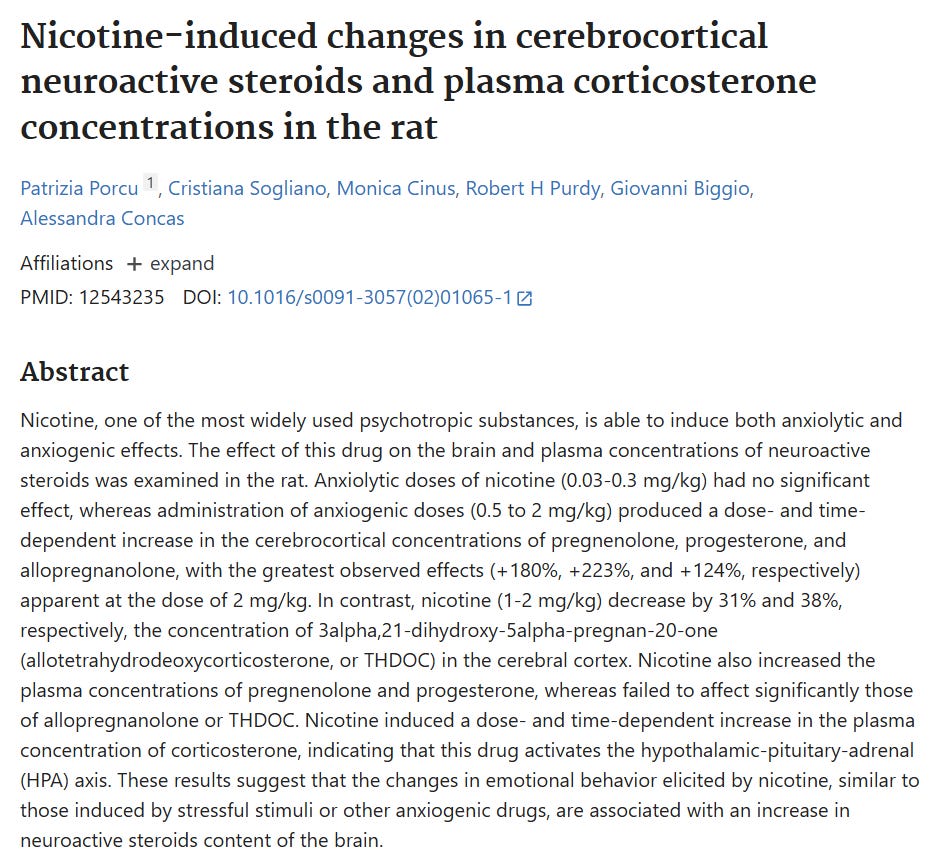
It increases dopamine synthesis, reduces serotonin, and raises neurosteroid levels of pregnenolone and progesterone. [10, 11, 12]
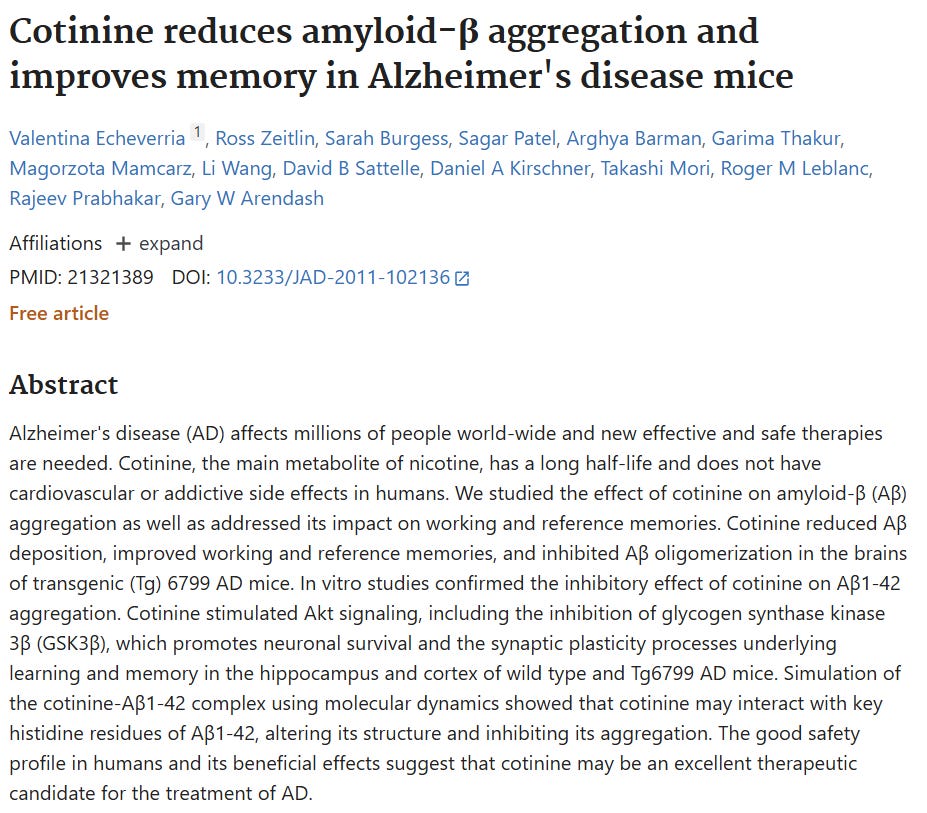
Cotinine, nicotine's primary metabolite, has been shown to reduce amyloid-beta deposition in Alzheimer's models and improve working memory. [13]
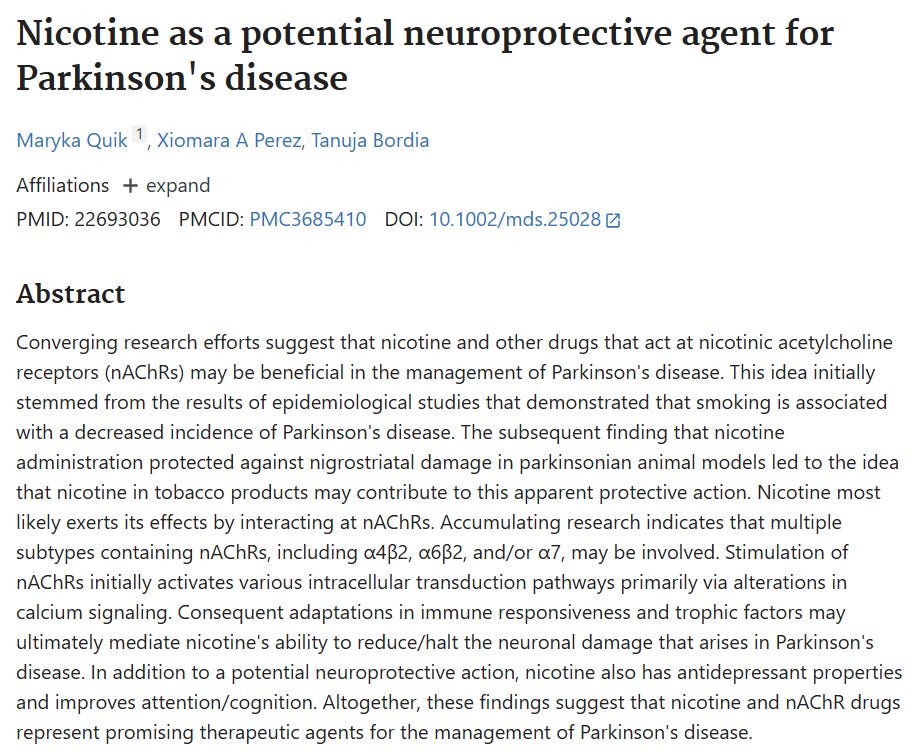
There is also evidence for neuroprotection against Parkinson's disease, anti-epileptic effects, and increased osteoblast activity—which has a protective effect against osteoporosis. [14, 15, 16]
Nicotine has also demonstrated reliable improvements in attention, working memory, and fine motor skills in both smokers and healthy non-smokers. [17]

And controlled clinical trials have shown that transdermal nicotine produces meaningful improvement in active ulcerative colitis. [18]
“At 4 weeks, 12 of 31 patients (39%) who received nicotine showed clinical improvement compared with 3 of 33 patients (9%) who received placebo (P = 0.007).”
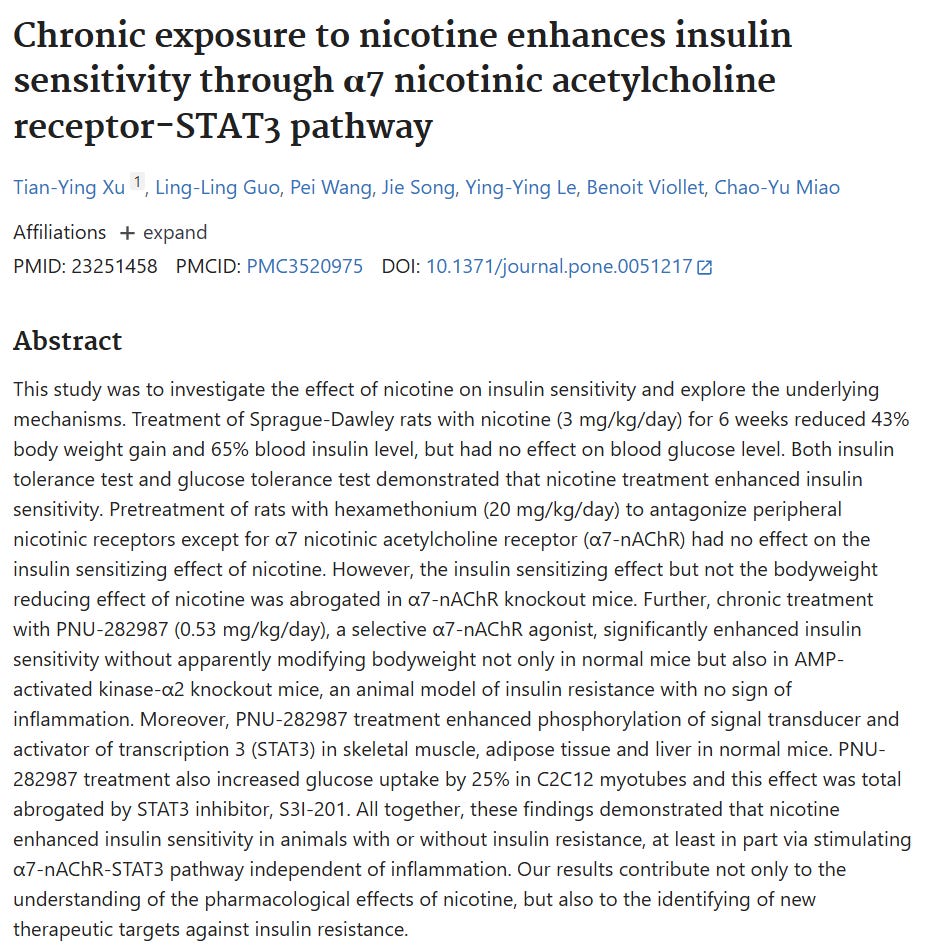
Chronic exposure to nicotine has been shown to enhance insulin sensitivity through activation of the α7 nicotinic acetylcholine receptor, independent of weight loss. [19]
Transdermal nicotine has shown meaningful clinical improvement in non-smokers with late-life depression, improving both mood and cognitive performance. [20]
“Nicotine may be a promising therapy for depressed mood and cognitive performance in LLD.”
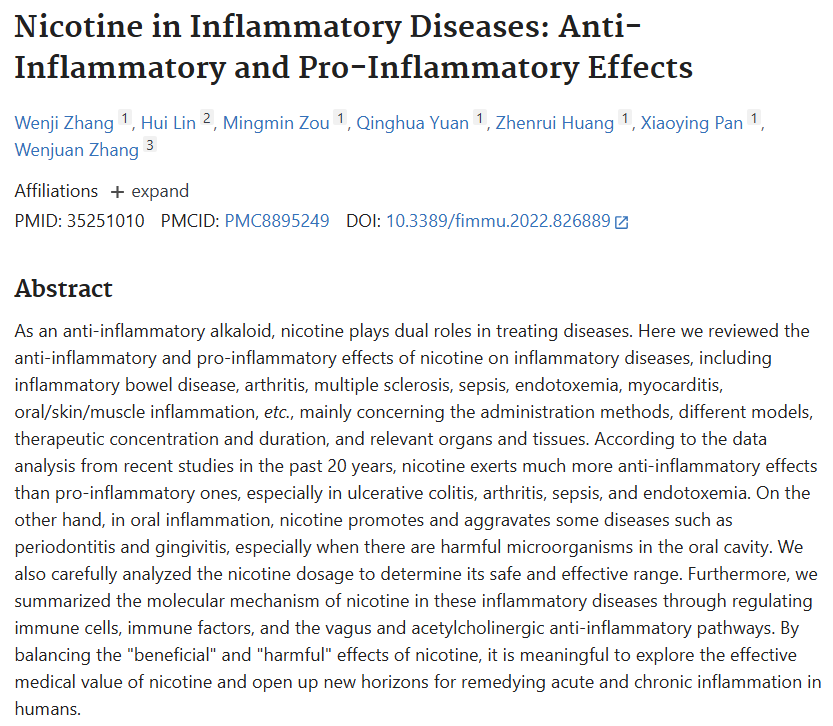
And nicotine has demonstrated broad anti-inflammatory effects across more than 20 disease models, with particularly strong evidence in ulcerative colitis, arthritis, and sepsis. [21]
Now, if you have more than 2 brain cells you’ll realize there’s a major caveats to what I’m arguing.
I don’t actually believe that smoking a pack a day is good for you.
I do believe, however, that nicotine has a large number of health-promoting effects, contrary to what the general public believes. Whether cigarettes fall into that category depends on their quality, additives, and how they are made.
I personally notice that when I smoke a couple of Marlboro Golds on a night out, my lungs feel like they’ve been coated with a thick layer of tar.
When I roll my own cigarettes with an additive-free tobacco (such as Manitou) and good filters and papers, I feel little to none of the negatives.

Do with this information what you will.
References:
[1] United Nations Department of Economic and Social Affairs (2024), World Population Prospects 2024
[2] World Health Organization (2023), WHO Report on the Global Tobacco Epidemic: Japan Country Profile
[3] Nakaji et al. (2003), Explanations for the Smoking Paradox in Japan
[4] Buettner, D. (2011), National Geographic, Ikaría at Dusk
[5] Kreouzi et al. (2024), Lessons Learned from Blue Zones, Lifestyle Medicine Pillars and Beyond
[6] Perkins et al. (1989), Acute Effects of Nicotine on Resting Metabolic Rate in Cigarette Smokers
[7] Hofstetter et al. (1986), Increased 24-Hour Energy Expenditure in Cigarette Smokers
[8] Biegon et al. (2010), Nicotine Blocks Brain Estrogen Synthase (Aromatase): In Vivo Positron Emission Tomography Studies in Female Baboons
[9] Tziomalos et al. (2004), Endocrine Effects of Tobacco Smoking
[10] Porcu et al. (2003), Nicotine-Induced Changes in Cerebrocortical Neuroactive Steroids and Plasma Corticosterone Concentrations in the Rat
[11] Hiremagalur & Sabban (1993), Nicotine Increases Expression of Tyrosine Hydroxylase
[12] Yoshida et al. (2002), Alcohol and Nicotine Administration Inhibits Serotonin Synthesis and Tryptophan Hydroxylase Expression in Dorsal and Median Raphe of Young Rats
[13] Echeverria et al. (2011), Cotinine Reduces Amyloid-β Aggregation and Improves Memory in Alzheimer’s Disease Mice
[14] Quik et al. (2012), Nicotine as a Potential Neuroprotective Agent for Parkinson’s Disease, Movement Disorders
[15] Willoughby et al. (2003), Nicotine as an Antiepileptic Agent in ADNFLE: An N-of-One Study
[16] Daffner et al. (2013), Nicotine Increases Osteoblast Activity of Induced Bone Marrow Stromal Cells in a Dose-Dependent Manner
[17] Heishman et al. (2010), Meta-Analysis of the Acute Effects of Nicotine and Smoking on Human Performance
[18] Sandborn et al. (1997), Transdermal Nicotine for Mildly to Moderately Active Ulcerative Colitis: A Randomized, Double-Blind, Placebo-Controlled Trial
[19] Xu et al. (2012), Chronic Exposure to Nicotine Enhances Insulin Sensitivity through α7 Nicotinic Acetylcholine Receptor-STAT3 Pathway
[20] Gandelman et al. (2018), Transdermal Nicotine for the Treatment of Mood and Cognitive Symptoms in Non-Smokers with Late-Life Depression
[21] Su et al. (2022), Nicotine in Inflammatory Diseases: Anti-Inflammatory and Pro-Inflammatory Effects
pouch, once daily. the best roa in terms of health benefits we have thus far, to my knowledge.
Clickbait…in poor taste