

“Mitochondria” has become one of those words in the health space that people associate with “good,” without actually knowing what it is or what it does.
So here’s a short lesson on the topic.
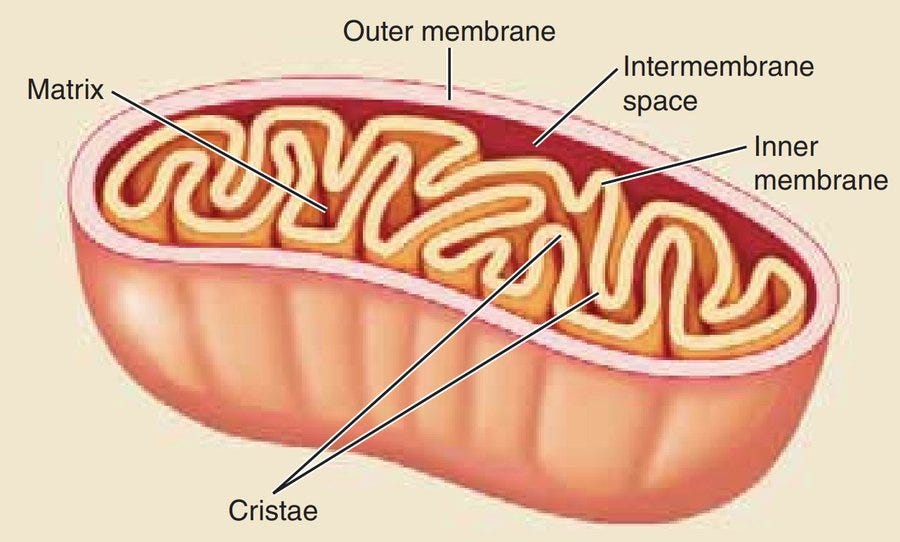
Mitochondria are membrane-bound organelles present in nearly all cells and are the principal site of cellular energy production.
Their central function is the generation of adenosine triphosphate (ATP), which is the molecule that supplies usable energy for essentially all cellular activity.
This includes things like:
Contraction of smooth, cardiac, and skeletal muscle
Transmission of nerve impulses
Synthesis of proteins, DNA, and RNA
Cell growth, division, and repair
Active transport across cell membranes
Maintaining cell shape and the cytoskeleton
Release of neurotransmitters
Synthesis and secretion of hormones
Vesicle transport, including secretion and uptake
Production of body heat
Immune cell activity and defense
Wound healing and tissue regeneration
Digestion and nutrient absorption
Detoxification in the liver
Movement of cilia and flagella, including sperm motility
Calcium storage and signaling
Cell signaling and enzyme activation
Sensory processes such as vision and hearing
Brain activity and cognition
To name a few.
To meet these demands, the cell produces ATP primarily through three sequential stages.
1) Glycolysis
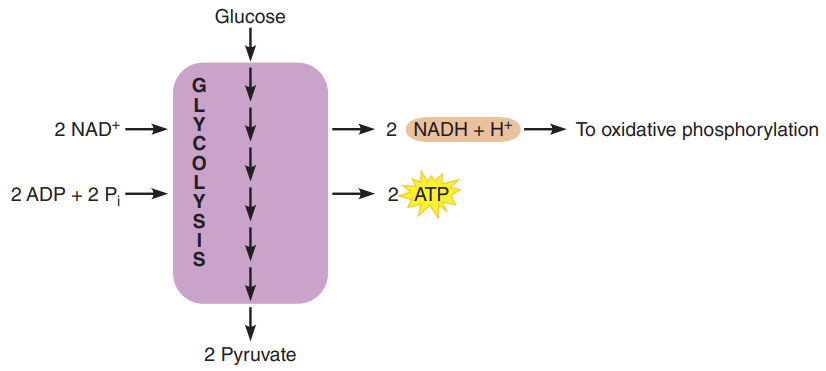
This occurs in the cytoplasm of the cell, outside the mitochondria. Glucose is broken down into two pyruvate molecules, releasing a small amount of ATP. The pyruvate then enters the mitochondria, where the remaining stages take place.
2) The Citric Acid Cycle
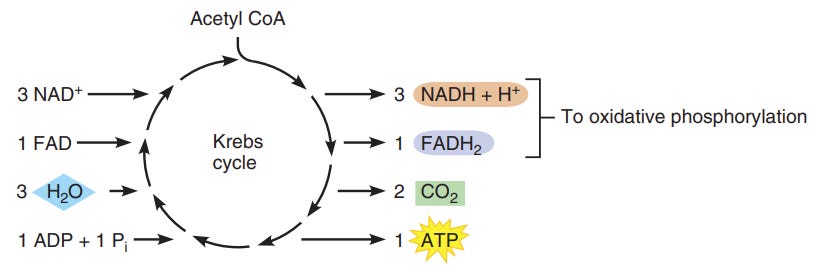
Also known as the Krebs Cycle. It occurs in the mitochondrial matrix, the innermost compartment. The pyruvate is first converted into a molecule called acetyl-CoA, which enters the cycle and is broken down further—stripping high-energy electrons from it and releasing carbon dioxide. Those electrons are loaded onto carrier molecules that deliver them to the final stage.
3) Oxidative Phosphorylation
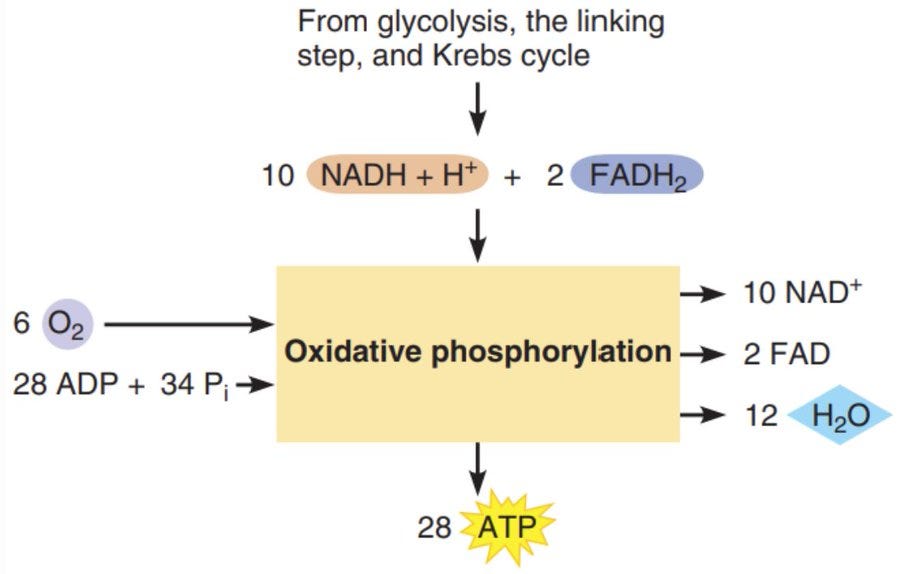
This occurs at the inner mitochondrial membrane, where the electrons are passed along a series of protein complexes—the electron transport chain—toward oxygen, the final electron acceptor. This movement pumps protons across the membrane, and their controlled flow back through the enzyme ATP synthase drives the production of the large majority of the cell’s ATP.
In summary...
1) Glycolysis breaks down glucose into pyruvate in the cytoplasm, releasing a small amount of energy.
2) The citric acid cycle then takes that fuel apart inside the mitochondria, releasing carbon dioxide and extracting high-energy electrons.
3) Oxidative phosphorylation uses those electrons, together with oxygen, to produce the large majority of the cell’s ATP.
And to understand how this pathway works, it is often helpful to see how certain compounds interact with it.
Vitamin B1 (thiamine)
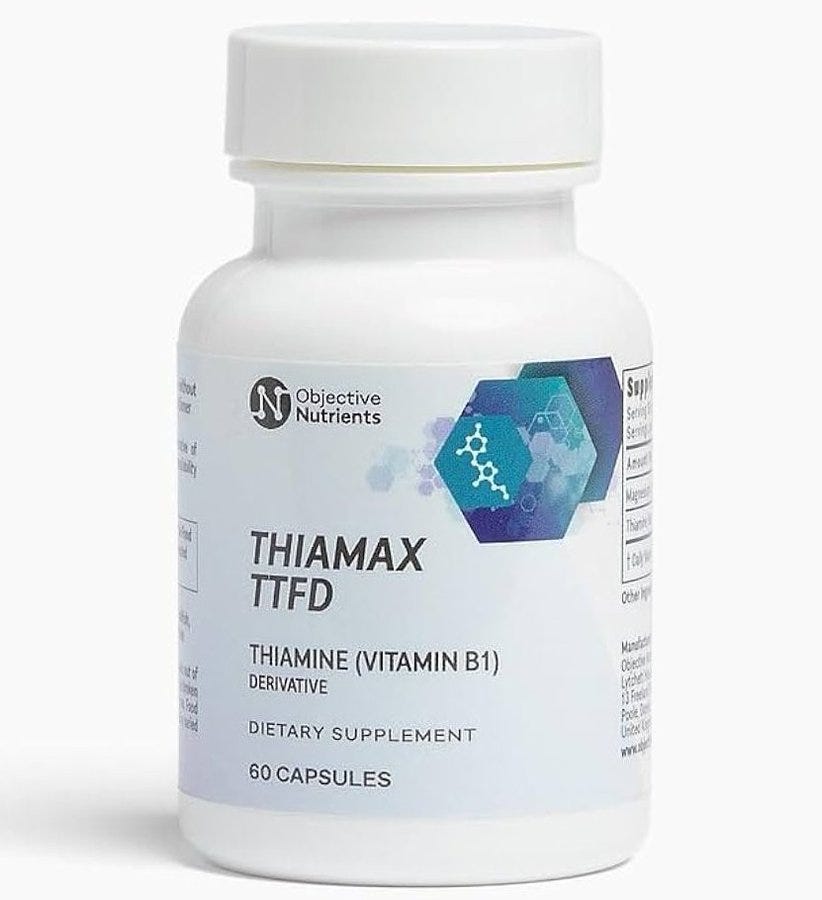
In its active form, thiamine is an essential cofactor for the enzymes that carry fuel into the citric acid cycle. It is required by pyruvate dehydrogenase, which converts pyruvate into acetyl-CoA, and by a key enzyme of the citric acid cycle itself. Without sufficient thiamine, pyruvate cannot be efficiently converted to acetyl-CoA and is instead diverted into lactic acid. Thiamine therefore acts at the entry to the oxidative pathway.
Coenzyme Q10 (ubiquinone)
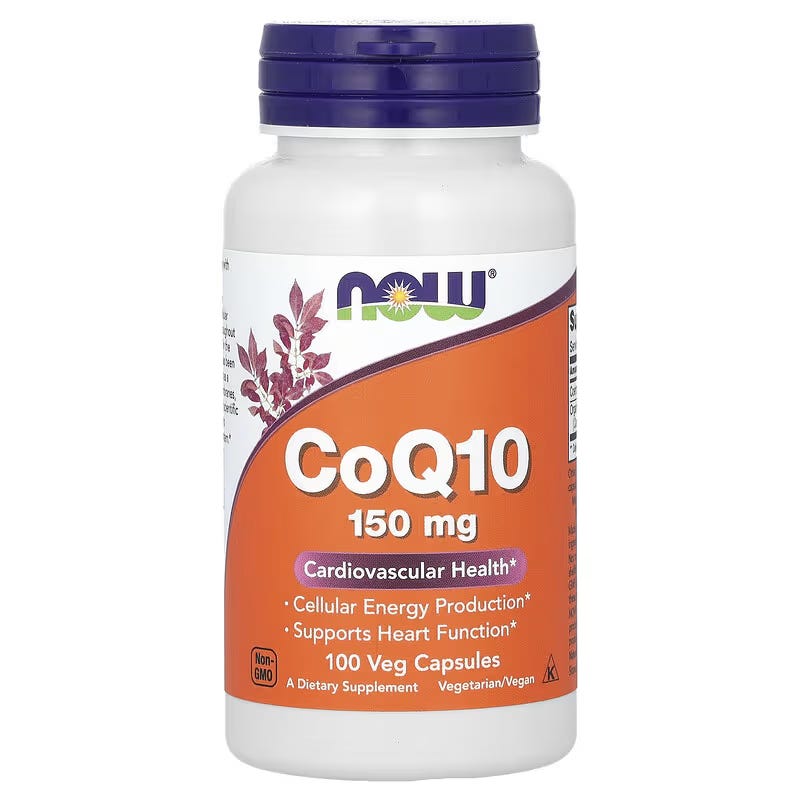
CoQ10 is a built-in component of the electron transport chain. It is a small, fat-soluble molecule that moves freely within the inner mitochondrial membrane, accepting electrons from the early protein complexes and passing them further down the chain toward oxygen. It is, in effect, one of the native links in the third stage.
Methylene Blue

Methylene blue acts at the same final stage, but as an alternative carrier rather than a native one. It can accept electrons and pass them toward oxygen, effectively providing a parallel route through the chain. In doing so it can support ATP production and reduce the electron leakage that would otherwise form reactive oxygen species. But because that alternative route can bypass some of the chain’s proton-pumping complexes, it may also lower the amount of ATP produced per electron.
It’s important to note that the body relies on several other pathways to produce ATP, which were left out for the sake of simplicity.
They include things like...
Beta-oxidation: the breakdown of fats into acetyl-CoA, which feeds into the citric acid cycle
Amino acid catabolism: the use of protein for energy, with its components entering the cycle at various points
Ketone metabolism: the burning of ketone bodies in place of glucose when carbohydrate is scarce
Anaerobic glycolysis: the production of a small amount of ATP without oxygen, ending in lactic acid
Creatine phosphate: a rapid means of regenerating ATP during short, intense bursts of effort
I hope this provides some context for those of you who didn’t know what mitochondria actually are, or what they do. If you want me to go more in depth on things like the Krebs cycle or the electron transport chain, let me know.
Thank you for reading!